
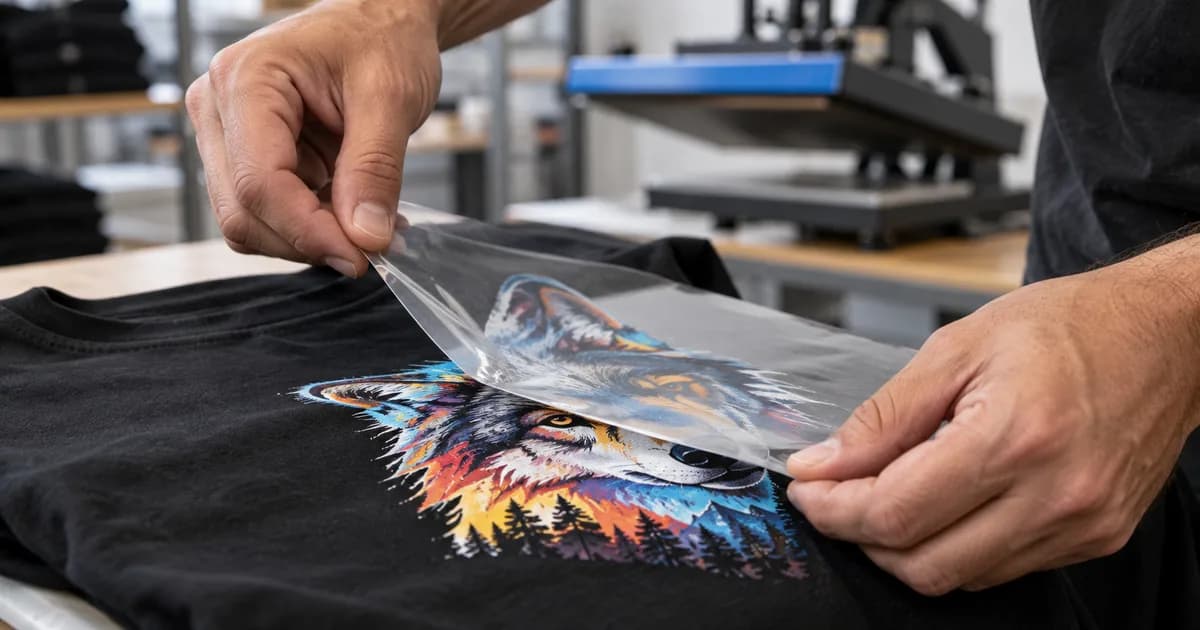
When a transfer fails, changing several press settings at once hides the cause. Diagnose one variable at a time and record each test.
Begin with the instructions supplied with the transfer and confirm the press platen temperature with a suitable measurement tool if results are inconsistent.
Edges Lift During the Peel
Stop peeling, lay the film back down, and repress according to the supplier guidance. Common causes include insufficient pressure, a cold area on the platen, moisture, an uneven seam, or peeling outside the intended hot/warm/cold window.
The Print Cracks When Stretched
Cracking immediately after application can indicate incomplete bonding or excessive stress on a large solid ink area. Confirm time, temperature, and pressure; then evaluate whether the artwork can use more open space or distressing without changing its intent.
The Garment Scorches or Shines
The fabric may be heat sensitive, the temperature may be too high, or the dwell may be too long. Test a hidden area, reduce exposure within the approved recipe, and use an appropriate cover sheet. Polyester dyes may migrate into light ink when heated.
Adhesion Fails After Washing
Review application records before blaming wash care. Uneven pressure, moisture, incompatible garment coatings, and an incomplete finishing press can create early failure. Also confirm that the garment rested before washing and was not exposed to bleach or extreme dryer heat.
Build a Controlled Test
Use identical garments and artwork. Change only one factor per sample, label each result, and wash test the strongest candidate. This produces a reliable shop recipe instead of a lucky one-time press.
Practical Takeaway
Most application problems become manageable when you isolate variables. Keep the transfer batch, garment style, press, settings, peel method, and wash result in one simple production record.
Ready for the next step? review the application sequence.