
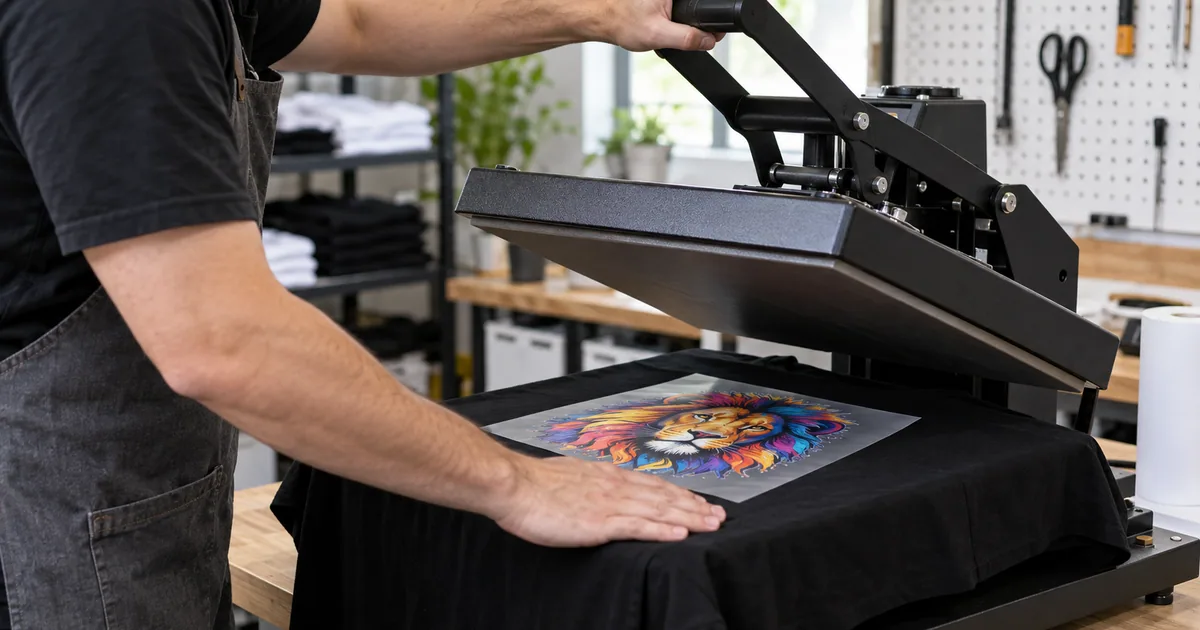
Reliable DTF application comes from controlling four variables: temperature, time, pressure, and peel timing. Treat a supplier setting as a tested starting point rather than a universal law because presses and garments vary.
For transfers from a specific supplier, follow the instructions shipped with that transfer before any general guide.
Start With the Supplied Recipe
A common working range is roughly 300–325°F (150–165°C) for 10–20 seconds using medium to firm, even pressure. The correct point inside that range depends on the film, adhesive, garment, and press calibration.
Pre-Press the Garment
A short pre-press smooths the application area and removes surface moisture. Place the transfer on a flat seam-free area. Thick seams, zippers, collars, and pockets can prevent even pressure; use a pressing pillow or platen arrangement when needed.
Pressure Must Be Even
Many failures blamed on temperature are actually pressure problems. Check that the platen closes evenly and that the garment is not lifting one side. Use the press manufacturer’s pressure guidance rather than guessing from handle resistance alone.
Peel and Finish Correctly
Follow the supplied hot-, warm-, or cold-peel direction. Pull smoothly at a low angle while watching the edges. A brief finishing press under parchment or a suitable cover sheet can improve surface consistency and complete the bond.
Test Before Production
Press one sample, allow it to cool, stretch the print gently, and inspect fine edges. Wash testing is the best confirmation before a new garment or high-value order enters production.
Practical Takeaway
Record the successful recipe for each garment style and press. Consistent notes turn application from guesswork into a repeatable production process.
Ready for the next step? diagnose common pressing problems.