
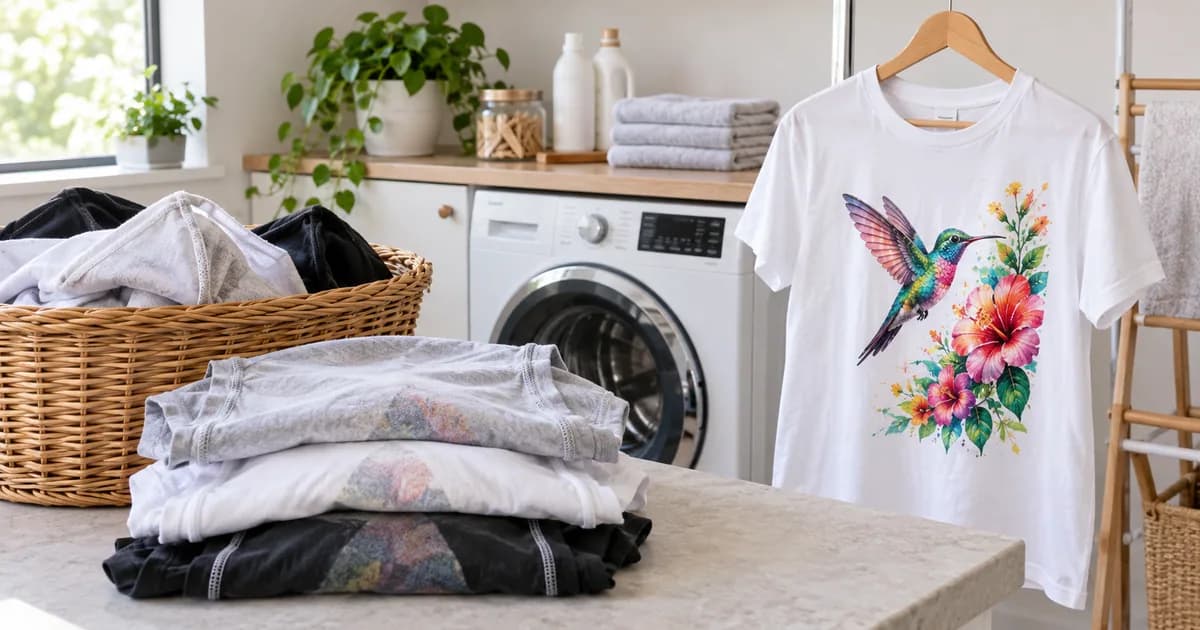
A durable transfer still benefits from sensible garment care. Heat, abrasion, harsh chemicals, and repeated high-energy drying place more stress on a decorated shirt than ordinary wear.
Simple instructions also reduce customer-service questions, so include a care card with every finished garment you sell.
Wait Before the First Wash
Allow the finished garment to rest after pressing. A 24-hour wait is a practical standard unless the transfer supplier specifies otherwise. This gives the applied system time to stabilize before water and detergent are introduced.
Turn the Garment Inside Out
Inside-out washing reduces direct rubbing between the print and other garments, zippers, or drum surfaces. Use cold or cool water and a normal mild detergent.
- Avoid chlorine bleach on decorated areas
- Do not dry clean unless the garment and transfer are approved for it
- Wash with similar soft garments when possible
Use Lower Dryer Heat
High dryer heat repeatedly expands and contracts both fabric and print. Air drying is gentle; a low-heat tumble setting is the practical alternative. Remove garments promptly instead of baking them after they are dry.
Do Not Iron the Print Directly
If ironing is necessary, turn the garment inside out and use low heat appropriate for the fabric. Never place a hot iron directly on the transfer surface.
When Damage Appears Early
Early lifting, cracking, or edge failure usually points to application pressure, time, temperature, or a garment compatibility issue rather than normal washing. Keep one production sample and document the press recipe so problems can be traced.
Practical Takeaway
Cold wash, inside out, mild detergent, and low dryer heat is a clear care message customers can remember. Pair those habits with a verified press recipe for the best result.
Ready for the next step? review the DTF application guide.